Introduction to Zoho HRMS
Human resource management has become increasingly digital as organizations adopt cloud-based solutions to manage employees, attendance, payroll, and performance. One of the most widely used HR software platforms is Zoho People, which is part of the larger ecosystem developed by Zoho Corporation.
This blog explains what Zoho HRMS is, how it works, its features, benefits, components, comparison with other HRMS solutions, and the latest updates available in 2026. The information is presented in a documentation-style format for clarity and accuracy.
What is Zoho HRMS?
Zoho HRMS refers to the human resource management solution offered through Zoho People, a cloud-based HR software system designed to manage employee data, attendance, leave, onboarding, performance, and HR operations from a centralized platform.
The platform enables organizations to manage HR processes digitally instead of relying on manual spreadsheets or paperwork. Through a unified dashboard, HR teams can track employee records, manage time and attendance, handle onboarding and offboarding activities, and generate HR analytics reports.
Zoho HRMS is designed for organizations of different sizes, from startups to large enterprises. It provides modules such as performance management, learning management, employee engagement tools, document management, and HR analytics to support modern workforce management.
According to industry reviews, Zoho People is used by over 60,000 businesses worldwide and is part of the broader Zoho software ecosystem that includes multiple business applications.
How Does Zoho HRMS Work?
Zoho HRMS works through a cloud-based SaaS (Software as a Service) model, allowing organizations to manage HR operations through an online platform accessible via web or mobile applications.
The system operates through structured modules that automate different HR processes.
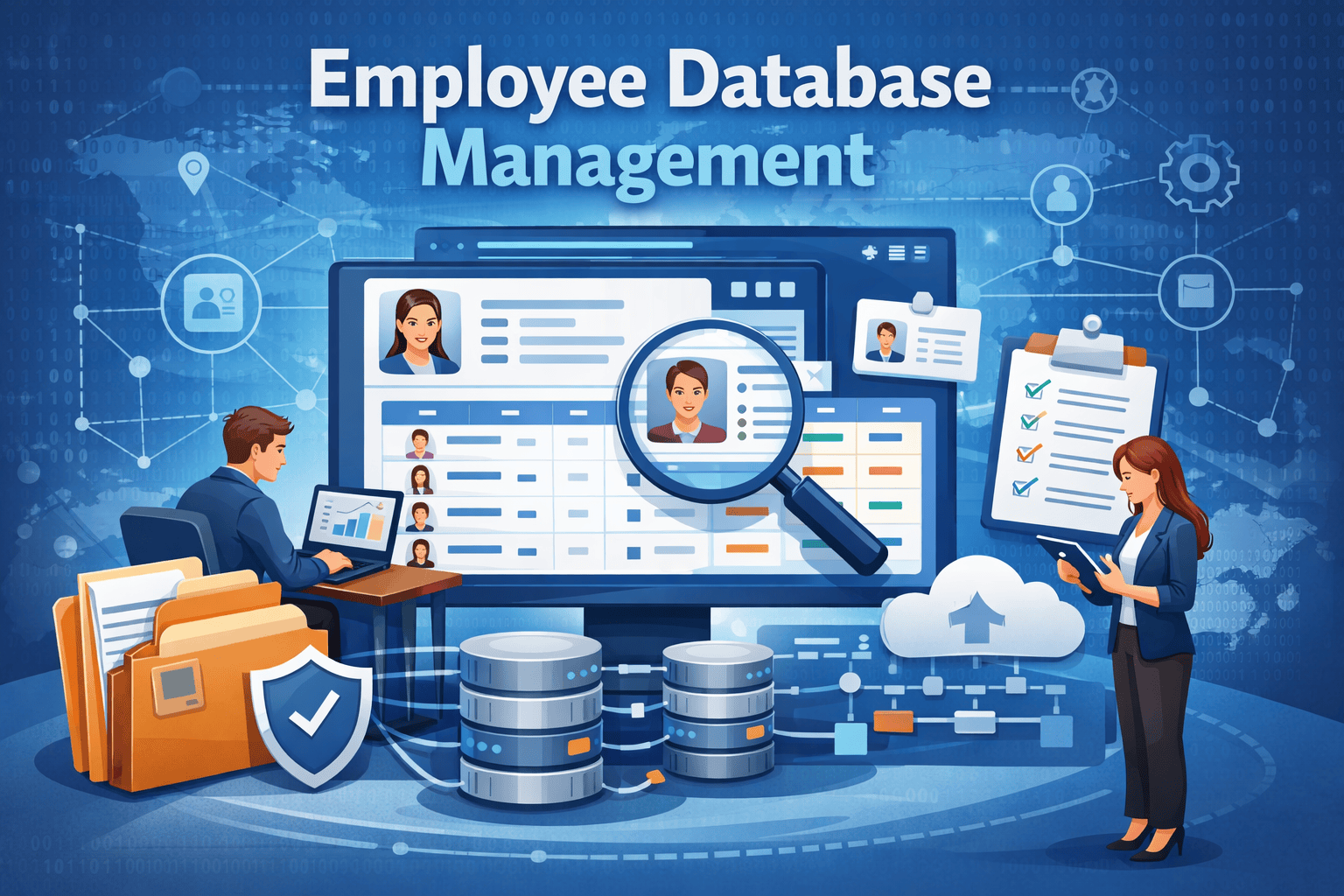
Employee Database Management
The HR team stores employee information such as personal details, job roles, department structure, and organizational hierarchy in a centralized database. This allows HR professionals to access and update employee records easily.
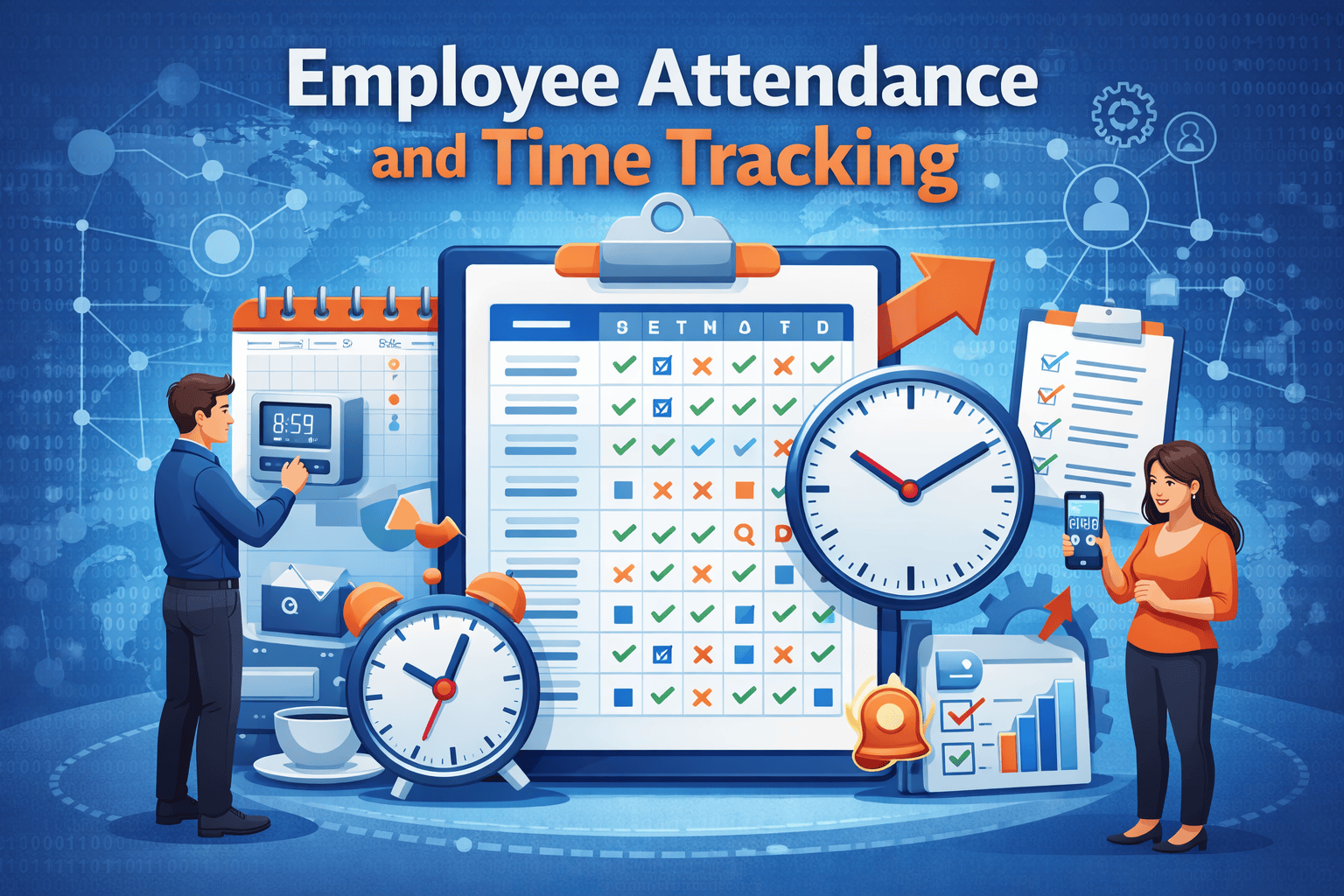
Attendance and Time Tracking
Employees can mark attendance through various methods such as mobile apps, web portals, biometric devices, or IP-based login systems. The system records working hours and generates attendance reports automatically.
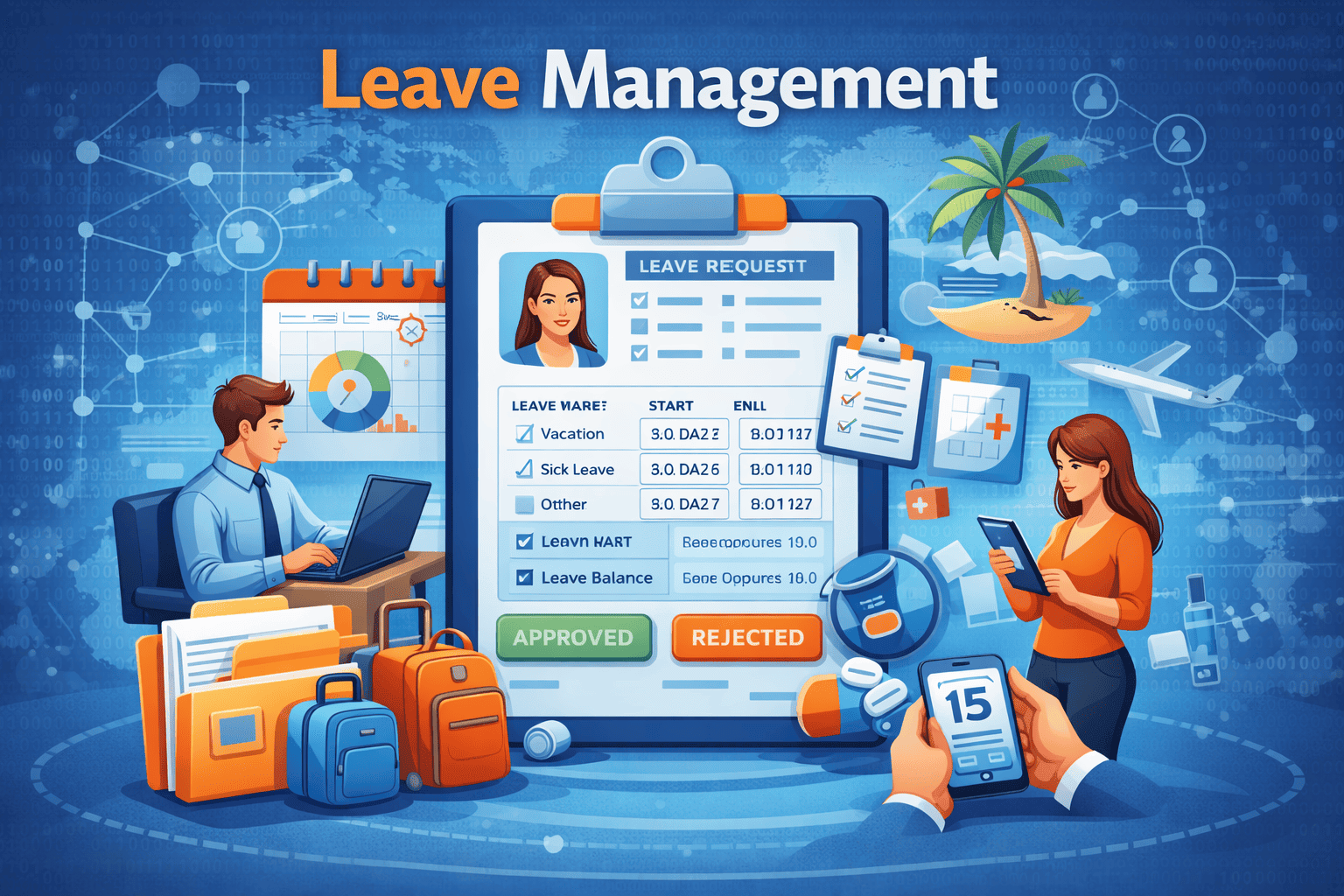
Leave Management
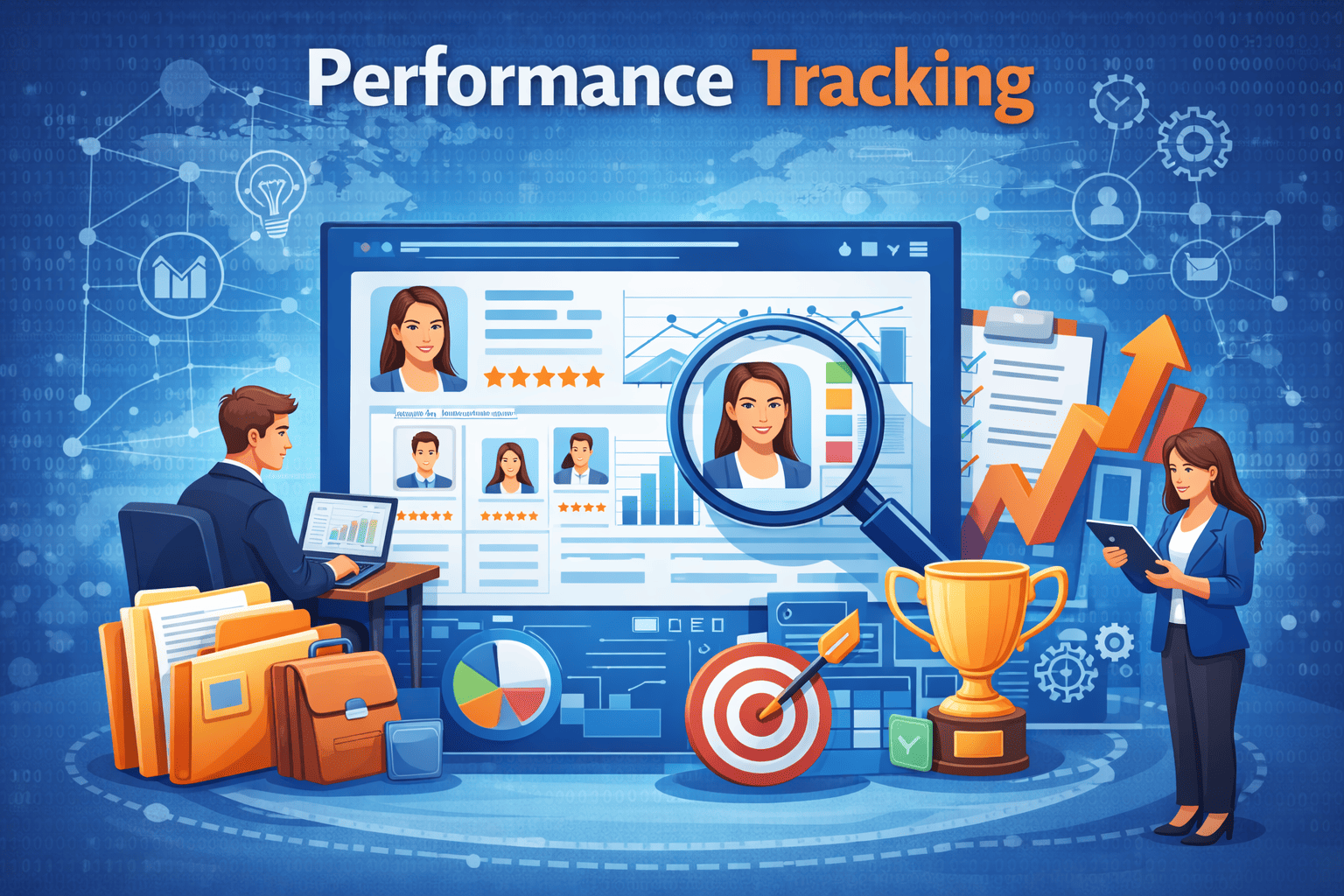
Performance Tracking
Managers can set goals, monitor employee performance, and conduct structured appraisals. Tools like goal tracking and feedback mechanisms help organizations monitor productivity.
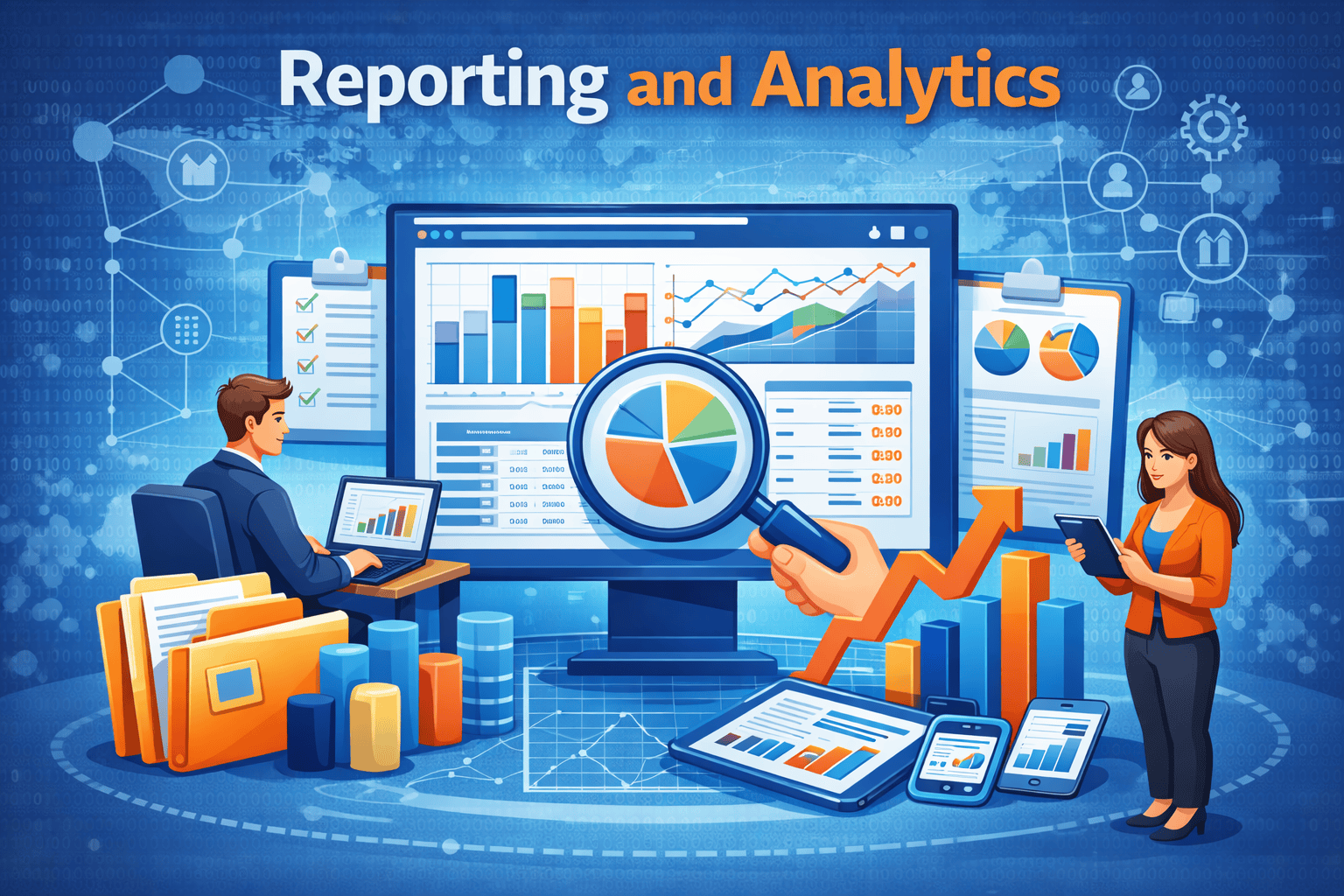
Reporting and Analytics
Zoho HRMS generates reports on attendance, workforce productivity, employee performance, and HR metrics, enabling better workforce decision-making.
What is Included in Zoho HRMS?
Core Applications
The Zoho HR ecosystem generally includes:
- Zoho People – HR management platform
- Zoho Recruit – recruitment and applicant tracking system
- Zoho Payroll – payroll management software
These applications can be used individually or integrated to create a complete HRMS solution.
Key HR Modules
Typical modules available in Zoho HRMS include:
- Employee database management
- Recruitment and onboarding
- Attendance and time tracking
- Leave management
- Performance management
- Learning and development systems
- Document management
- Employee engagement tools
- HR analytics and reporting
These modules help organizations manage the full employee lifecycle from hiring to performance evaluation.
Features of Zoho HRMS
Zoho HRMS provides a range of features designed to simplify HR operations.
1. Centralized Employee Database
HR teams can store all employee records in one system, eliminating the need for multiple spreadsheets or disconnected tools.
2. Attendance and Time Management
The platform supports multiple attendance tracking options including:
- Online check-in and check-out
- Mobile attendance
- Biometric device integration
- Shift scheduling and timesheets
These features help track employee working hours accurately.
3. Leave Management System
Employees can request leave through the portal, while managers approve or reject requests digitally. The system automatically calculates leave balances.
4. Performance Management
Organizations can conduct structured performance evaluations using features such as:
- Goal tracking
- 360-degree feedback
- Performance appraisals
- Skill analysis
These tools support employee growth and productivity management.
5. Workflow Automation
HR processes like onboarding, approvals, and document submission can be automated through workflow rules and triggers.
6. Mobile Application
Zoho People provides mobile apps for Android and iOS, enabling employees and managers to access HR services from anywhere.
7. Integration Capabilities
The software integrates with other Zoho applications such as CRM, payroll, and finance tools to streamline business operations.
Benefits of Using an HRMS
- Automation of HR Processes: Automation reduces manual work in attendance tracking, leave management, and approval processes. This helps HR teams save significant administrative time.
- Centralized Data Management: All employee information is stored in one platform, making it easier to access and manage HR data.
- Improved Employee Experience: Self-service portals allow employees to apply for leave, update personal information, and view HR documents without contacting HR teams.
- Cloud Accessibility: Because the system is cloud-based, HR teams and employees can access it from different locations, which is useful for remote or hybrid teams.
- Better Workforce Insights: HR analytics and reporting tools help organizations analyze workforce performance and productivity.
Zoho HRMS vs Other HRMS Software
Feature | Zoho HRMS (Zoho People) | Other HRMS Software |
| Deployment | Cloud-based HR management system | Mostly cloud-based, some offer hybrid options |
| Employee Database | Centralized employee records with customizable fields | Standard employee record management |
| Attendance Management | Online check-in/out, biometric integration, and mobile tracking | Attendance tracking available but features vary by software |
| Leave Management | Configurable leave policies with automated approval workflows | Leave tracking with predefined policies |
| Payroll Management | Payroll through integration with Zoho Payroll | Many HRMS tools provide built-in payroll modules |
| Performance Management | Goal tracking, KRAs, and performance reviews | Performance tracking available but may require additional modules |
| Employee Self-Service | Employees can apply for leave, check attendance, and update details | Self-service portals available in most HRMS systems |
| Workflow Automation | Highly customizable workflows and approvals | Basic to advanced workflow automation depending on the tool |
| Integration | Strong integration with Zoho ecosystem (CRM, Books, Projects, etc.) | Integrates with multiple third-party applications |
| Mobile Access | Dedicated mobile app for Android and iOS | Most HRMS tools provide mobile apps |
| Best For | Startups, SMEs, and businesses using Zoho products | SMEs to large enterprises depending on the software |
| Pricing Model | Subscription-based per user | Usually subscription-based per employee |
Latest Updates in Zoho HRMS (2026)
- Enhanced HR Analytics: Modern HR dashboards provide detailed workforce insights through data analytics and reporting features.
- Improved Mobile Accessibility: The mobile application continues to support attendance tracking, leave requests, and HR approvals for employees and managers working remotely.
- Advanced Automation: Workflow automation allows HR teams to automate processes such as onboarding tasks, approvals, and document management.
- Integration with Zoho Ecosystem: Zoho HRMS integrates with applications like Zoho Recruit and Zoho Payroll to support end-to-end HR management.
- Continuous Platform Enhancements: Zoho continues to enhance its HR software through new features, interface updates, and improved integrations across the Zoho product ecosystem.
Conclusion
Zoho HRMS is a cloud-based human resource management platform designed to streamline HR operations such as employee data management, attendance tracking, leave management, performance evaluation, and workforce analytics.
By integrating modules like recruitment, onboarding, employee self-service, and reporting, the platform helps organizations manage HR processes more efficiently. With its integration capabilities and cloud-based architecture, Zoho HRMS has become a widely used HR solution for businesses seeking to digitize their HR operations.
As workforce management continues to evolve in 2026, solutions like Zoho HRMS play an important role in helping organizations manage employees, automate HR processes, and maintain structured HR data across the entire employee lifecycle.